
Searching the Heath Court Docket
Heath’s own codified ordinances name Licking County Municipal Court in Newark as the municipal court serving all of Licking County. Heath is included. There is no separate Heath Mayor’s Court. There is no city-run docket portal, and no Heath payment database. That single fact shapes every search. Whether the case is a traffic ticket, a misdemeanor, a qualifying civil claim, or small claims, the docket lives at the countywide Municipal Court in Newark. Guessing at a Heath court site leads nowhere.
- Read the court name on the Heath ticket, summons, or complaint.
- For municipal matters, open Licking County Municipal Court’s official Records Search/Online Payments route.
- Accept the Civica gateway terms and use available case information.
- Read the newest docket entry for status and setting information.
- Call the Municipal Clerk if the case, date, or requested document is not available online.
Felony charges and major general civil matters that arise in Heath travel a different road: the Common Pleas General Division. So the first job is identifying the right court, not typing the city name into a search box and hoping.
Heath Has No Separate Mayor’s Court
Calling a local matter a "Heath Mayor’s Court case" would simply be wrong. Heath’s codified ordinances point to the countywide Licking County Municipal Court instead. So the clerk who holds the record is the Municipal Clerk at the Newark courthouse. That holds even when the ordinance, the police contact, or the fine belongs to Heath. A city tie does not create a second docket keeper.
Knowing the split saves wasted searching. Use the Heath name to understand jurisdiction and routing. Then use the real court’s name to pull up the Heath court docket. Ohio offers no universal public trial-court search, so the proper court’s own route matters. A Heath citation does not become a Common Pleas record just because it arose in the city. Nor does a Heath ordinance line become a Mayor’s Court file because the city may collect fine revenue.
Three things control the route for anyone following a case. They are the court caption, the case number, and the most recent notice. The Municipal Clerk keeps Heath-related municipal files. Common Pleas holds a Heath felony or major civil file. Probate-Juvenile keeps Heath probate or juvenile cases. That court split answers the puzzle. It works even when a Heath docket search returns nothing in the first system tried.
Heath Municipal Court Basics
Licking County Municipal Court sits at 40 W. Main Street, third floor, Newark, Ohio 43055. The Municipal Clerk there keeps the traffic, misdemeanor, civil, and small-claims records. Civil claims are capped at $15,000. The published phone number is 740-670-7800. Heath cases in these categories all run through this countywide court. It is separate from the Licking County Common Pleas Clerk of Courts.
For records access and eligible payments, the Municipal Court uses its official Civica Authority Web Connect entry. The gateway asks you to accept a disclaimer. It then offers agency access or traffic and criminal payment. Its interactive search fields vary. So work from the options the page itself presents when doing a Heath case lookup.
Heath Ordinance Docket Custody
Here is a point that trips people up. Heath's ordinance materials say fine money from city-ordinance cases can flow into the City Treasury. Yet the case docket itself stays with the countywide Municipal Court clerk. The code recognizes municipal-court costs. It names no separate Heath records office. Where the revenue lands and who holds the record are two different questions.
So, for any Heath ordinance case, the clerk is the place to go. Ask the Municipal Clerk for the docket, the order, or the copy. Name the court. Give the case number if you have one, and say which item you want. An online payment path is no substitute for the clerk's case record. A city code provision is not one either.
Court Dates and Settings in Heath
Checking a Heath court date takes two steps. First read the case docket in the Municipal Court system, then confirm the date against the court's official-calendar hierarchy. Municipal Court posts calendar links for Courtrooms 1, 2, and 3, but labels them guides. The court itself gives the answer. The official calendar sits in the appropriate judge's office or Small Claims Court.
| Date | Use the newest Heath-related Municipal Court docket entry. |
|---|---|
| Time | Confirm a material time with the judge’s office or Small Claims Court. |
| Courtroom | Published calendars divide Courtrooms 1, 2, and 3. |
| Judge | Published assignments identify Judge B. Matthew George, Magistrate Teresa Liston, and Judge David N. Stansbury. |
| Setting type | Read whether the entry is an arraignment, hearing, trial, or changed setting. |
A guide calendar can lag behind a later docket notice, so let direct court confirmation settle any conflict.
Heath Calendar Confirmation
Heath readers often assume city staff set local court dates. They do not. The Municipal Court office handling a Heath case controls its schedule. So check the Heath docket first when checking a date. Read each entry carefully. A scheduled event looks different from one that was continued or completed. If the date truly matters, call the right Municipal Court office.
Common Pleas works a bit differently. Its clerk records refresh with fresh case material roughly every fifteen minutes. That happens during business hours. Handy as that is, it still is not an official calendar. The court division and its clerk stay the proper place to confirm.
A Heath notice can list a Municipal Court date. That can be true even when the case began with a city ordinance or a Heath traffic stop. That city connection changes nothing about the Municipal Court calendar rule. Work in order. Start with the citation or summons, then the latest docket entry, then the published courtroom calendar. Finish with the judge's office or Small Claims Court for a firm confirmation. A continuance or cancellation can turn an older calendar line stale.
Once a matter leaves Municipal Court, the court-first rule still applies. A Heath felony or major civil case sits with Common Pleas General Division. Domestic, probate, and juvenile matters go to the division that received them. Confirm each court date through that division's clerk. Never assume the municipal calendar covers every Heath case.
Traffic Tickets in Heath
A Heath traffic ticket usually lands in Licking County Municipal Court, and the court's Civica entry is the official record and payment gateway there. The court offers no detailed online search filters for tickets, so rely on your citation and court notice rather than a ticket-number lookup form. Need help? The Municipal Clerk at 740-670-7800 is the local fallback.
One court ticket record is not every record out there. The case docket shows court events, filings, orders, and disposition information the court makes available. If the ticket requires appearance, follow the summons. For countywide court-record routing, see Licking County traffic tickets.
Heath Municipal Court Location
The official Heath municipal-court code identifies the court route for Heath municipal proceedings.
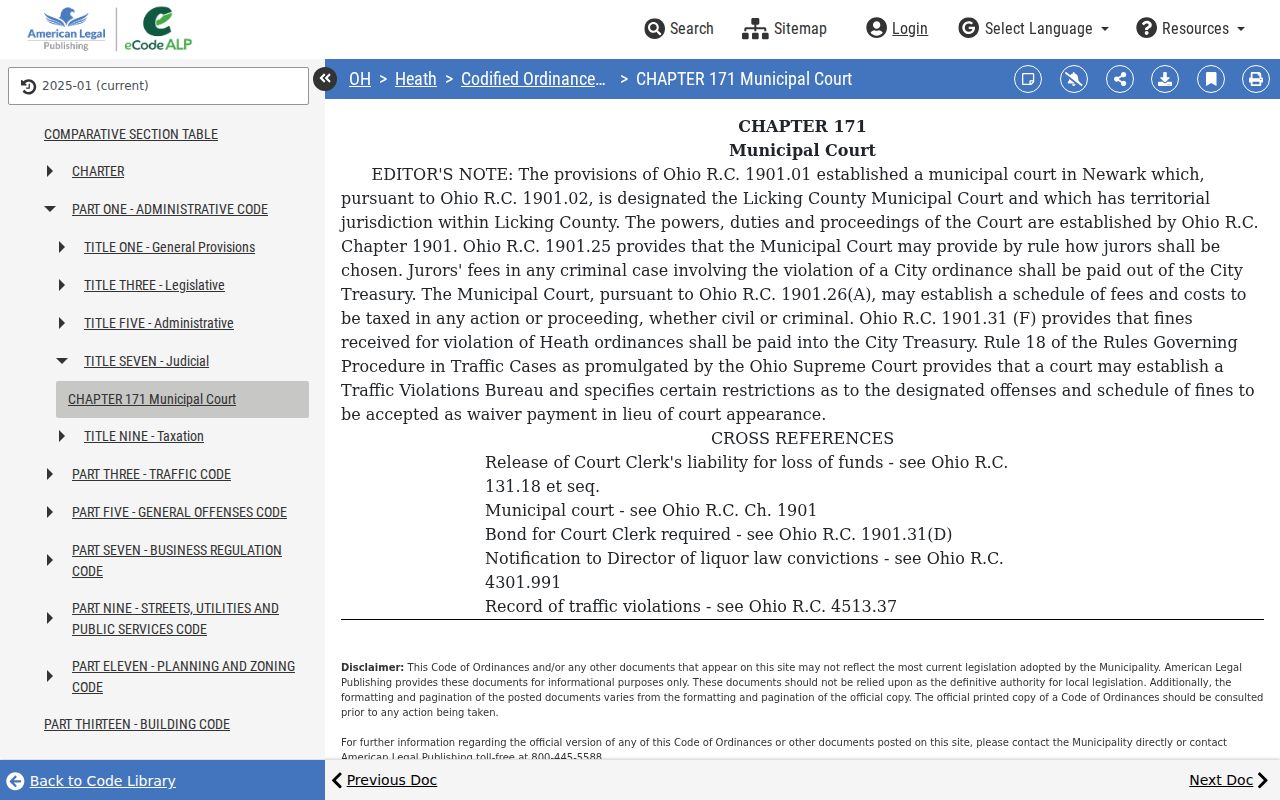
Heath records belong with Licking County Municipal Court, not with any separate city docket database. The City of Heath's contact page places City Hall at 1287 Hebron Road, and that listing backs up the county-court routing for Heath cases.
City Hall serves as a city contact point. It does not amount to a separate Heath court clerk or public court portal, so Licking County Municipal Court remains the office to contact.
Where Heath Cases Go
Heath traffic, misdemeanors, civil claims through the municipal limit, and small claims all follow Licking County Municipal Court. Felonies and major general civil disputes belong to Common Pleas General Division. Domestic Relations, Probate, and Juvenile stand as separate Common Pleas divisions. Each has its own record keepers and access limits. A city address never shifts the receiving court's jurisdiction.
Docket flow: Heath municipal-level matter › Licking County Municipal Court › Licking County Court of Common Pleas › Ohio Fifth District Court of Appeals
Transfers and appeals can put a case record in a new court. When that happens, search the court named in the new notice, not just the original Heath connection.
Heath Court Docket Context
Heath counted 10,412 residents in the official 2020 table. The Municipal Court's 2025 probation report lists 95 Heath-origin cases in a city-origin supervision chart. Read that figure carefully. It counts probation supervision, not total Heath tickets or filings. It simply shows how the countywide court connects to Heath.
That limit matters. Heath publishes no city-specific annual court report, Mayor's Court portal, or docket total. The honest Heath docket answer starts with the documented countywide Municipal Court route. It does not start with invented city-court numbers.
Heath Court Record Access Rules
Heath municipal court records fall under Ohio court-record rules. Start with the proper court channel. Then ask the correct clerk for direct access or a copy. Bring the court name, case number if known, record type, and whether you need a plain or certified copy. Keep in mind that an online result is not automatically a certified court document.
Ohio court-record rules:
Sup.R. 44-47 govern public access, redaction, and court-record distribution.
R.C. 2303.901 defines Common Pleas case documents and excludes identifiers and restricted material.
Sealed records, confidential juvenile material, and other legally restricted information may not be publicly displayed.
Heath Court Record Fallback
Start by checking the court named on the paperwork. That one step answers most questions. A Heath felony, a major civil claim, or a Domestic Relations, Probate, or juvenile matter sits outside the Municipal Court. Its docket will never surface through that route. The Licking County Common Pleas Clerk runs a remote case lookup. It reaches available General Division, Domestic Relations, and Fifth District material. It leaves out listed protection-order categories, though, and not every court record is available remotely.
When the Heath record still does not turn up, go to the right office directly. Ask in person, by phone, or in writing. Direct access, a plain copy, and a certified copy are three different requests. Say which one you want. Give the clerk the Heath-related court and division, the case number if you have it, the document title or docket sheet you need, and whether certification matters. The Common Pleas material publishes no universal copy or certification charge. So ask for a current quote, the accepted payment method, and the turnaround. A filing fee is not the same thing as a record-copy fee.
Know the difference between a docket and the paper behind it. The docket is the chronological index: filings, settings, service, entries. A filed order, judgment, exhibit, or transcript-related document may need its own request. A screen display is not the certified record either. An entry proving a document exists does not promise remote image access. The Municipal Clerk or the proper Common Pleas division can tell you what access exists for your Heath case.
Older Heath matters that belong to Common Pleas may live in Licking County Records & Archives. That office holds pre-1992 clerk materials and index books. It is not a web search and cannot certify anything. Use the archive to trace a record trail, then return to the originating clerk or court for certified copies. This court-first fallback works even though no single online search box covers every local record.