
Searching Licking County Criminal Dockets
Look first at the offense level and the court name printed on the charging paper. Felonies belong to the Licking County Court of Common Pleas General Division. Its clerk sends remote users to the current Common Pleas case-records landing page. The terms there lead into the public docket search. Entries ordinarily refresh every 15 minutes during business hours. A very recent filing may need follow-up.
Misdemeanors and county traffic matters sit in a separate Licking County Municipal Court record channel. A citation from Pataskala, Granville, or Reynoldsburg might instead belong to that city's Mayor's Court. The court named on the ticket controls your route. Remember that an online result is a reference view, not a certified case record.
- Read the summons, citation, or court notice for the exact court and division.
- For a General Division felony, accept the Common Pleas remote-access terms and use its linked public records search.
- For Municipal Court, use its court-linked access channel; for Pataskala, use its separate public docket search.
- Open the matching case and read the newest dated docket entry, its status, and any scheduled setting.
- Call the record custodian when a new case, a date, or a document is not visible online.
Licking County Criminal Court Split
Licking County splits its criminal dockets among several offices. General Division felony records form one set; Municipal Court misdemeanors form another. Mayor's Courts handle eligible traffic and ordinance matters on a third track. That split explains a common dead end. Someone searches Common Pleas for a municipal charge, then reads an empty screen as proof that no case exists. It proves nothing of the kind.
| Court | Criminal matters | Record route |
|---|---|---|
| Common Pleas General Division | All felony criminal cases | Common Pleas Clerk and available remote case records |
| Licking County Municipal Court | Misdemeanors and traffic offenses | Municipal Clerk and court-linked Civica access |
| Pataskala Mayor’s Court | Eligible traffic and misdemeanor cases | Pataskala docket search and Mayor’s Court Clerk |
| Granville or Reynoldsburg Mayor’s Court | Local eligible matters | Respective city clerk and court route |
Each city court has limits. Pataskala excludes juvenile, domestic-violence, and repeat-OVI matters, Granville sends serious, counsel, and jury cases to Municipal Court, and Reynoldsburg lists several exclusions of its own. So a city address alone never tells you who holds the Licking criminal docket.
Inside a Licking County Criminal Docket
A docket is a chronological register, not just a case title on a results page. Licking's legacy Common Pleas display listed docket and document entries by Date Received, Description, and Text. Service and financial areas appeared there too. Today the clerk states that remote access covers case dockets. It also covers pleadings available under the governing rules. That promise does not extend to an online image of every filing or exhibit.
| Court and case number | Identify the receiving court first. The published Common Pleas payment example uses 2025CV00100 for civil formatting, not a universal criminal-number rule. |
|---|---|
| Docket chronology | Date Received, Description, and Text can show when an item was filed or an event occurred. |
| Service record | Legacy fields include method, issuer, status, date, and sometimes tracking information. |
| Setting | Look for the newest arraignment, bond, pretrial, plea, trial, or sentencing entry and its current status. |
| Financial record | Displayed costs can include document date, name, cost assessed, and amount remaining; they are not copy fees. |
Be careful how you read rows. A service entry shows process activity, never a decision on guilt. A docket label can note that a transcript was filed. The transcript itself stays off the download screen. For real context, read the actual order or disposition entry.
Licking County Criminal Setting Terms
Local calendar vocabulary beats guesswork, since the county publishes no code dictionary for every abbreviation. Legacy Common Pleas schedule labels include arraignment, bond hearing, bond reduction oral hearing, bond revocation or modification, pretrial conference, change of plea and sentencing, and application to seal records. Each one marks a stage of the case. None of them, by itself, announces the final result.
- Arraignment
- An initial criminal appearance where a plea is addressed.
- Bond hearing
- A setting concerning release conditions or amount.
- Pretrial conference
- A preparation setting before a plea or trial.
- Change of plea and sentencing
- A combined setting that still requires review of the later entry for the recorded outcome.
When a short label stumps you, keep the docket's exact wording and ask the clerk or court what it means. Inventing an expansion could turn a routine court-entry reference into a false statement about the case.
How a Criminal Case Moves
Most Licking criminal docket entries trace the same arc. That arc runs initiation, arraignment and release, pretrial movement, disposition, and sometimes an appeal. A felony can open with a complaint, indictment, information, summons, warrant, or a related service event. Misdemeanor and traffic-linked criminal charges start in the proper Municipal or Mayor's Court. The docket tracks each event. It never replaces the charging document itself.
Docket flow: Filing or charge › Arraignment › Pretrial › Plea or trial › Disposition › Sentencing
Focus on the newest dated entry. A notice of setting can later give way to a continuance, a completed hearing, or a further order. Appeal entries show up too. The old Licking interface documented examples such as certified record transmitted, transcript of proceedings filed, an appellate opinion or entry, and return of a file from the Fifth District.
Licking County Fifth District Docket Trail
The Common Pleas Clerk's remote access also reaches Fifth District Court of Appeals cases. That helps when a Licking County criminal matter goes up on appeal. But it does not fold the trial and appellate files into one decision. A record-transmitted entry or a clerk-transcript fee marks administrative movement. It is not a ruling on the merits.
Search the proper case file and read its status in its own court. The Common Pleas remote-access notice warns that maintenance or outages can occur. For any time-sensitive appellate or trial setting, confirm with the court that controls it.
Legacy Licking entries also used phrases like "transcript of proceedings filed," "opinion/entry from Court of Appeals," and "case file returned from Court of Appeals." Each phrase records one docket event along the appeal path. Read it beside the actual appellate file and any later status. Treat none of them as the appeal decision. And treat none as proof that a transcript is instantly available on the public screen.
Courts That Hold Criminal Dockets
Felony charges in Licking County run through the Common Pleas General Division. The Common Pleas Clerk at 1 Courthouse Square keeps those court dockets. The office will confirm a new or missing felony filing at 740-670-5791. Misdemeanors and traffic cases are different. They sit with Licking County Municipal Court at 40 W. Main Street, third floor. Its Municipal Clerk handles that criminal docket at 740-670-7800.
City matters may stay in a Mayor's Court. Pataskala's clerk keeps those records at 621 W. Broad, Suite 2B, 740-927-3361. Granville lists its clerk at 141 E. Broadway, 740-587-2338. Reynoldsburg sits at 7232 E. Main, 614-322-6804. Where local rules permit, a defendant in Pataskala can ask for a judge or jury trial in Municipal Court instead.
Common Pleas criminal records
General Division Clerk
1 Courthouse Square
740-670-5791
Licking County Criminal Search Gaps
A blank result on a remote Licking County court docket search can mean several things. You may have queried the wrong court. The filing could still be inside its normal refresh window. A city court might hold the charge. Or access rules may keep the item off the screen. One hard limit stands out: the Common Pleas remote channel expressly excludes criminal protection orders. So an empty result screen in an excluded category tells you nothing. You cannot soundly infer that a case exists or does not exist from it.
Confirm the court name, division, and case type before anything else. Then call the clerk who keeps that record. Older Common Pleas criminal material lives in the county archives. Those archives hold pre-1992 clerk records, including criminal docket and appearance-docket series. The archives cannot certify a record. Certified copies come only from the clerk holding the case.
For a Municipal setting, the local confirmation order runs in three steps. Check the docket first. Use the published courtroom calendar as a guide. Then call the judge's office, since it keeps the official calendar. That extra step is local to Licking Municipal Court. It helps when a criminal date is close.
Sealed Dockets and Public Access
For modern case files, Ohio court records answer mainly to the Rules of Superintendence, not the ordinary Ohio Public Records Act. Sup.R. 45 begins with a presumption of access. Even so, direct and remote access can differ. In Licking County, the clerk’s public portal carries dockets and pleadings that may be made remotely available under those rules. Still, expect gaps. A sealed or restricted record, a protection order excluded from the remote portal, or confidential juvenile material may never appear online.
Ohio access rules.
Sup.R. 44-47 define court records, public access, redaction, and bulk distribution.
R.C. 2303.901 defines Common Pleas case documents and excludes protected identifiers and listed sensitive categories.
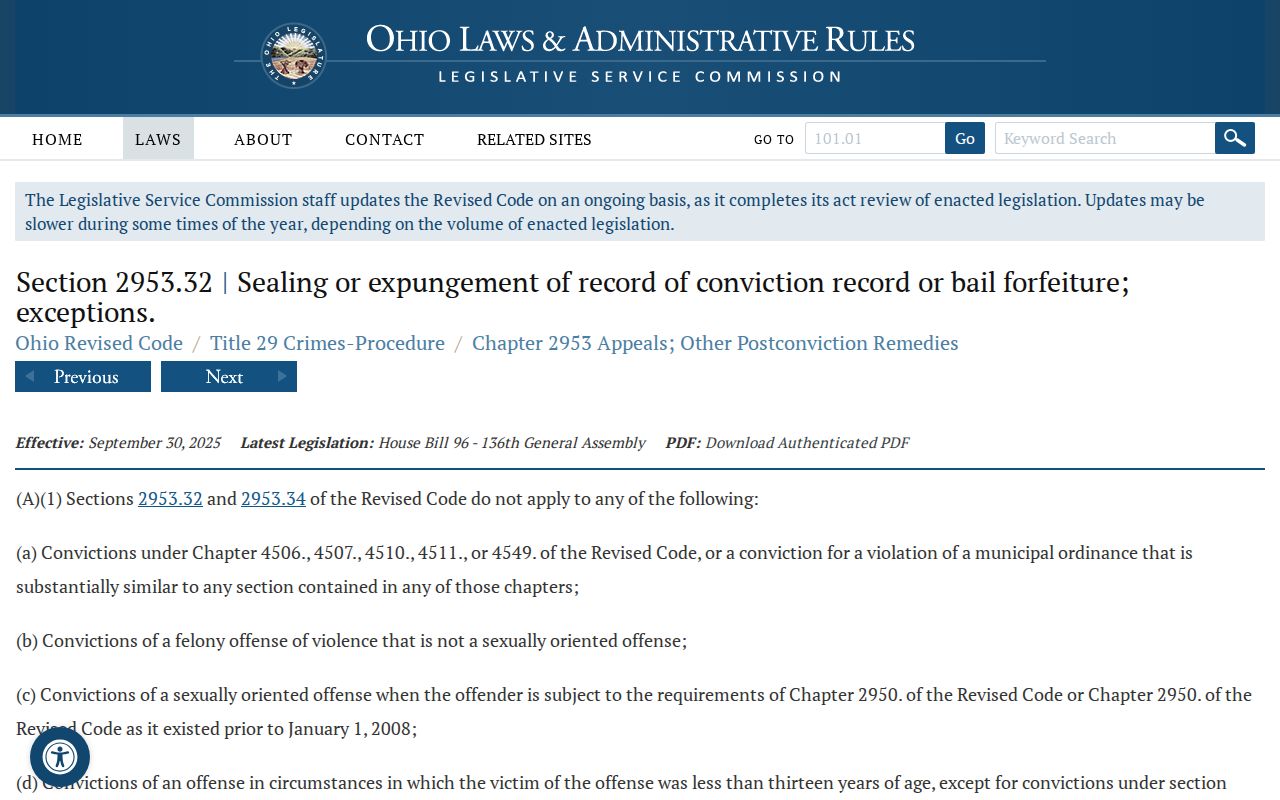
R.C. 2953.32 supplies the adult criminal sealing procedure.
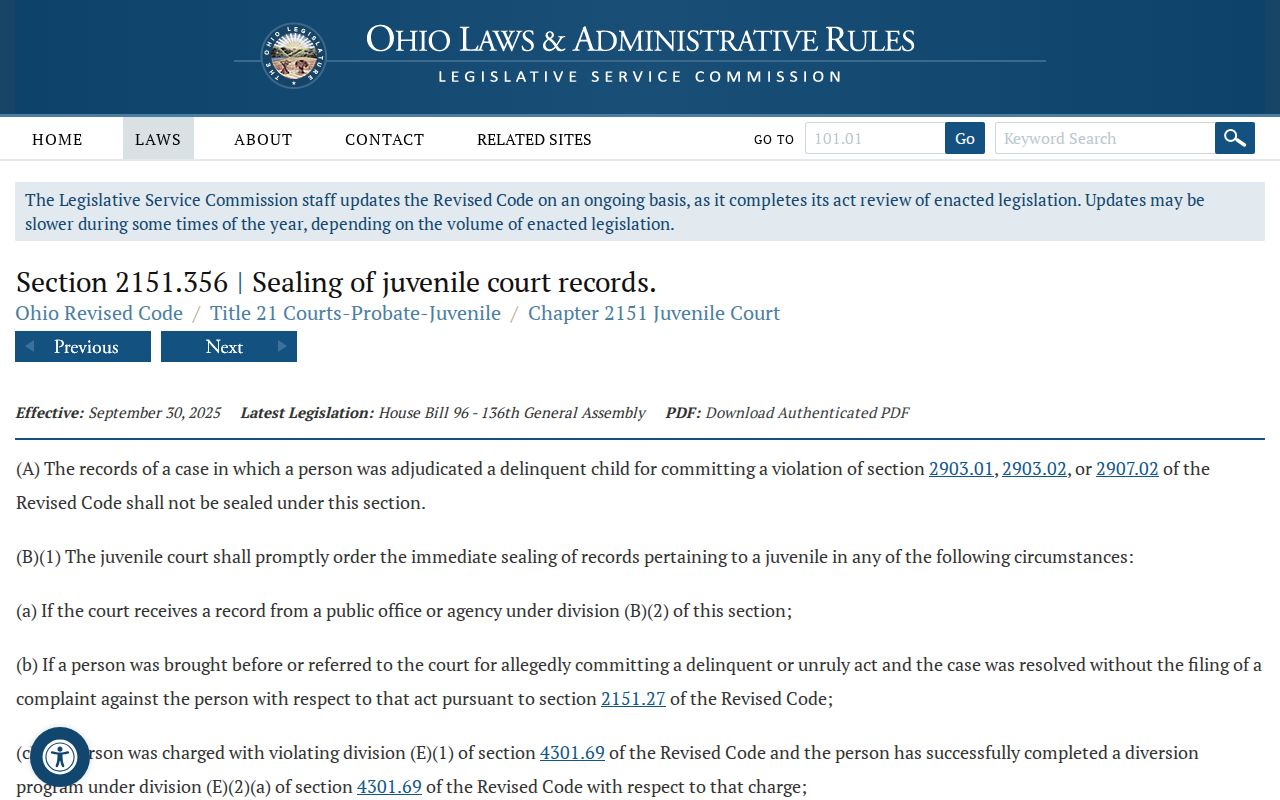
R.C. 2151.356 addresses juvenile sealing and expungement.
Note: An application to seal or expunge is only a request on the docket. It does not prove the court granted the restriction.
Licking County Sealing Record Sources
The Ohio adult sealing statute sets out the statutory route for eligible adult criminal-record relief. The filing path for a given case, and the outcome, remain matters for the court and the clerk.
A granted sealing order can close off access to a juvenile record. An online docket entry about the application tells you far less. It marks only a procedural step in the Licking County court docket. It is not the order itself.
The county's source set keeps the juvenile sealing statute. That statute lays out when sealing is allowed and what a granted order does.
Adult practice in Common Pleas tells you nothing here. For juvenile records, ask the Juvenile Court directly. The Licking Juvenile public documents page carries the county's own application to seal a juvenile record.
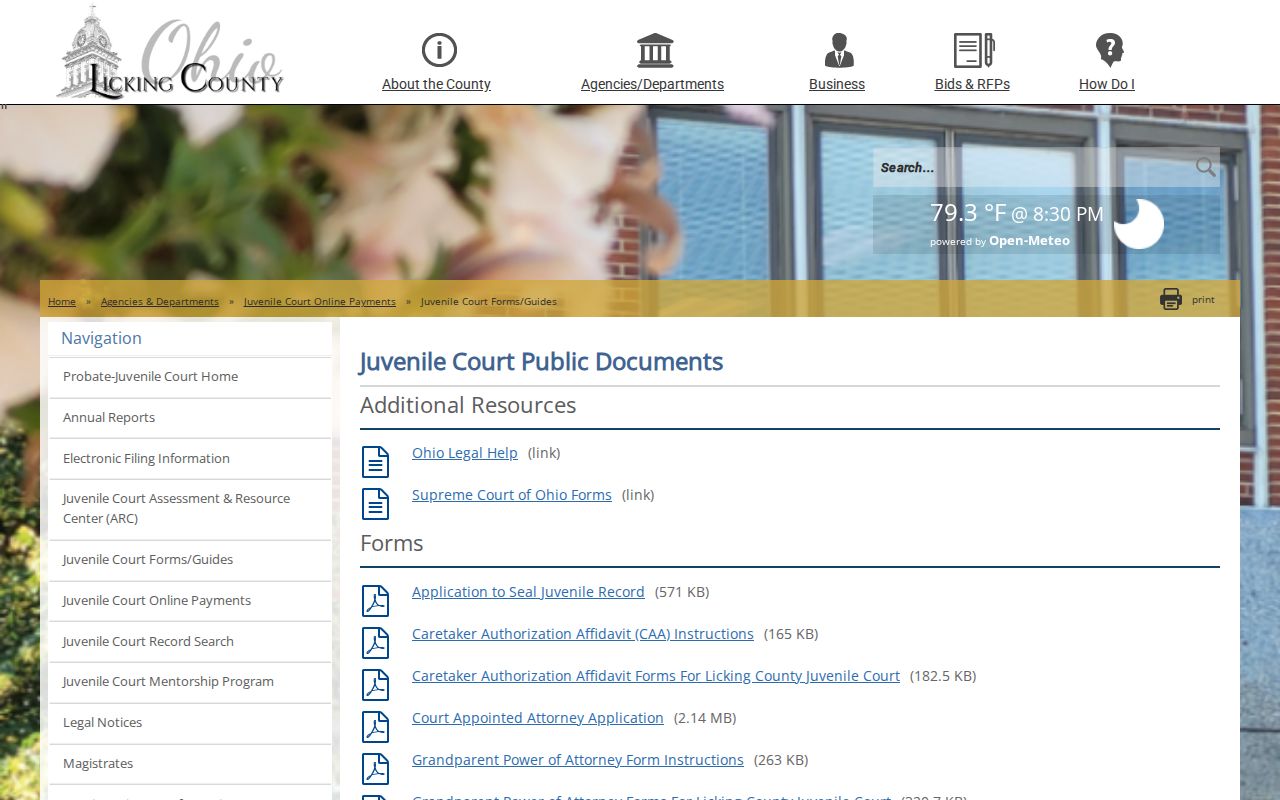
That local form opens a court route for a juvenile who qualifies for relief. It is not a way for the public to search restricted juvenile files.