
Searching Licking County Civil Dockets
The claim and the court decide which civil docket you need. Common Pleas General Division handles the larger civil work. That means negligence, malpractice, administrative appeals, contract claims, foreclosure, and declaratory or injunctive relief. Its clerk routes available records through the current Common Pleas case-records search. Remote material there normally updates at 15-minute intervals during business hours.
Municipal Court takes a different civil record path. It covers lawsuits up to $15,000 plus small claims. Domestic Relations dockets live at a separate clerk division. Probate keeps yet another set of file types. Use the case number exactly as the issuing court wrote it. The Common Pleas cost-payment screen shows a format example. But that format fits only that channel, not municipal, older, or domestic cases.
- Identify the claim type and the court named on the complaint, notice, or judgment.
- Use the Common Pleas remote records path for available General or Domestic records, or the Municipal Court channel for municipal matters.
- Open the case docket and read the chronology rather than relying only on a results row.
- Compare the newest setting or order with the case status.
- Ask the clerk for a plain or certified document when the docket line does not provide the needed record.
Licking County Civil Docket Court Split
General Division and Municipal Court do not share one Licking County civil docket. Which division you ask matters as much as the name or case number. Municipal Court is the lower civil venue. It takes claims through its stated $15,000 limit and small claims. Its clerk also handles eviction, judgment, and garnishment-related records. Common Pleas serves as the general-jurisdiction civil court for the bigger, listed categories of litigation.
| Court or division | Civil records kept | Local route |
|---|---|---|
| Common Pleas General Division | Major civil litigation, judgments, liens, and filings | General Division Clerk and available remote search |
| Licking County Municipal Court | Civil claims to $15,000, small claims, evictions | Municipal Clerk and court-linked access |
| Domestic Relations | Divorce, dissolution, custody, paternity, support | Domestic Clerk at its separate office |
| Probate | Estates, guardianships, trusts, name changes, wills | Probate-Juvenile Court records route |
That split means a small-claims docket should never be searched through Common Pleas alone. It also keeps Domestic Relations and Probate files from being flattened into a wrong general civil label.
Inside a Licking County Civil Docket
Think of a civil case docket as the court's register of activity in the case. A typical run goes complaint or petition, then service. Next come an answer or other response, motions, settings, orders, judgment or disposition, and post-judgment work. The legacy Licking Common Pleas interface listed Date Received, Description, and Text in its chronology. It kept separate service and financial blocks. Say less about current remote access. The clerk offers remotely available dockets and pleadings under the rules, and that is the honest scope.
| Initiating filing | The complaint or petition starts the docket chronology. |
|---|---|
| Service | Legacy fields show description, method, issuer, status, date, and sometimes tracking information. |
| Response or motion | An answer, motion, or later entry records a procedural request, not necessarily a decision. |
| Setting and order | Read the latest date, status, and court entry to know whether an event remains current. |
| Financial block | Cost assessed and amount remaining are case-finance fields, separate from record-copy pricing. |
A service entry is not a judgment. An appellate transmission entry is not an appellate decision. Read each item with its surrounding chronology, and get the actual document from the clerk when it matters.
Licking County Civil Settings Change
Licking's historical Common Pleas calendar used labels like case management conference, civil trial to the court, and non-oral hearing. One entry was marked rescheduled. That word counts. It tells you the original event is no longer the current court date. So end any docket search at the latest dated entry. Don't stop at the first setting that matches the name.
- Case management conference
- A court-directed scheduling or progress conference.
- Rescheduled
- An event has moved, so the prior date is no longer the controlling setting.
- Non-oral hearing
- A published event label that should not be assumed to require an in-person appearance.
- Judgment
- A court decision recorded by entry; obtain certification from the custodian if needed.
Municipal Court calendars are guides only. Judge offices or Small Claims Court hold the official calendar, so confirm a high-stakes Licking civil setting with the clerk or court office.
Civil Case Types on the Docket
General Division's published civil description covers negligence, professional malpractice, and administrative appeals. It also lists breach of contract, foreclosure, declaratory judgment, and injunctive relief. Municipal civil dockets add lower-value suits, small claims, eviction process, judgments, and garnishment-related matters. Domestic Relations takes divorce, dissolution, custody, paternity, and support. Probate records carry their own categories and access rules.
Pair the court with the claim category when you request a search. Give the clerk the case number if you have it. Add the court or division and the document type. Say whether you want the docket, a judgment, an ordinary copy, or a certified copy. That keeps a Licking court record request specific without guessing at internal file titles.
Licking County Civil Documents Online Limits
Seeing the civil docket online does not mean every document image, attachment, or exhibit is remotely accessible. The Common Pleas Clerk describes its remote collection as case dockets and pleadings made available under the rules. Sup.R. 45 allows direct and remote access to differ. A record can exist, sit at the court, and still never show up online.
This matters once your search turns up a relevant order or filing line. Request the actual pleading, order, judgment, or certified copy from the clerk with custody of the case. Name the document and its date rather than assuming an image will appear.
For Common Pleas General and Domestic records, the published remote scope is a convenience channel. It is not a full electronic case file. The clerk's local notice states that some information and documents are not publicly accessible. Certain protection-order categories stay out of the remote system. When you make a civil record request, say whether you need the docket sheet or a particular order, motion, judgment, or pleading. That wording lets the Licking clerk tell an available online entry from a request needing direct access.
Civil Docket Settings and Hearings
A Licking County Common Pleas civil setting starts with the current case docket. The clerk says it updates about every 15 minutes during business hours. The older calendar laid out a set of fields for each hearing. Those were the date, time, case number, event type, courtroom or facility, presiding official, and status. Those same fields are still the best way to read an entry. The current post-2025 calendar layout may differ. So confirm the format with the court or clerk. In Municipal Court, treat published courtroom pages as a rough guide only. The official calendar sits with the judge's office or Small Claims Court. A published schedule can point you to a hearing. But the court's own calendar settles any recent reset or conflict.
Historic Licking County Civil Docket Series
Older cases live in a different place. The Licking County Clerk of Courts keeps archival docket books rather than a live court docket search. Its archival holdings list shows Civil Dockets from 1903 through 1986 and Civil Appearance Dockets from 1819 through 1992, with some gaps. Treat this route as history research only. It cannot replace a current Common Pleas docket search or an official certified copy.
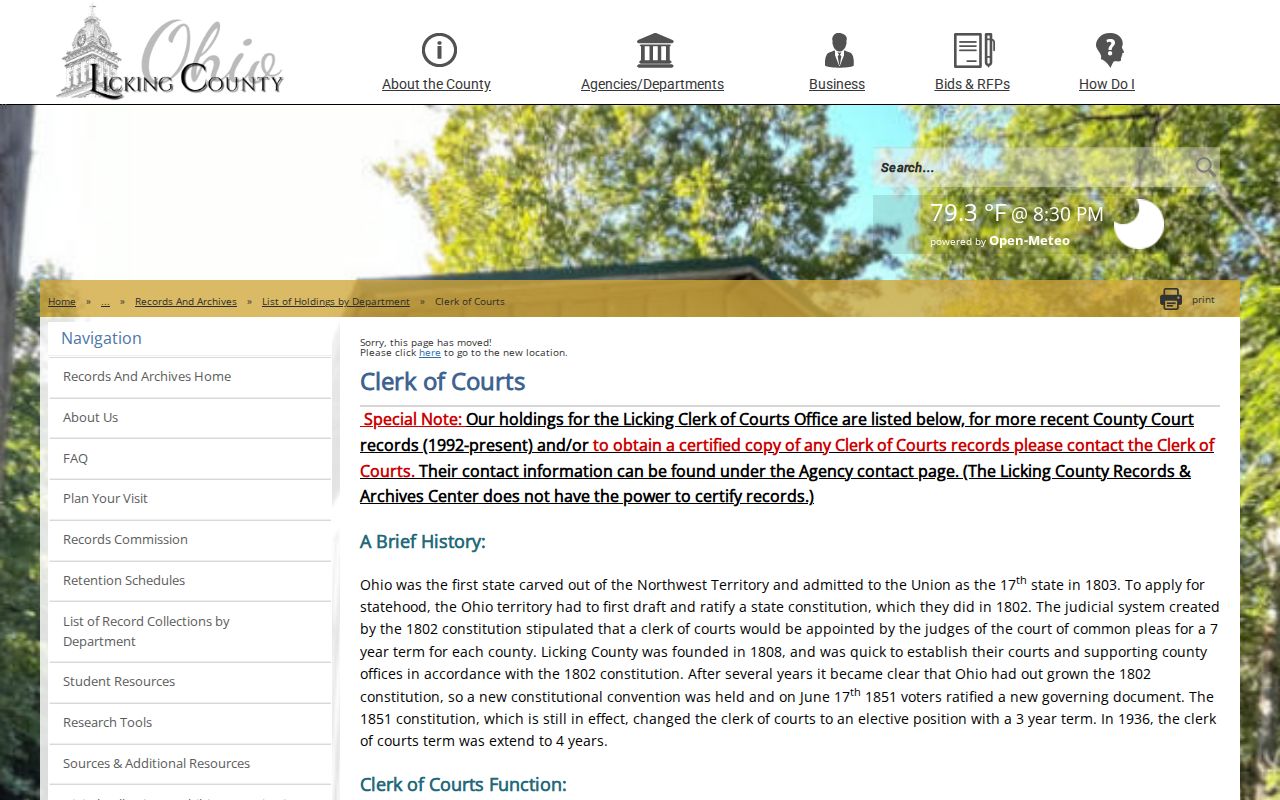
Archivists can help you locate old civil docket material. They cannot issue certified copies of court records, so certification requests go back to the clerk that holds the record. The county's records collection list explains the scope of what the archive holds.
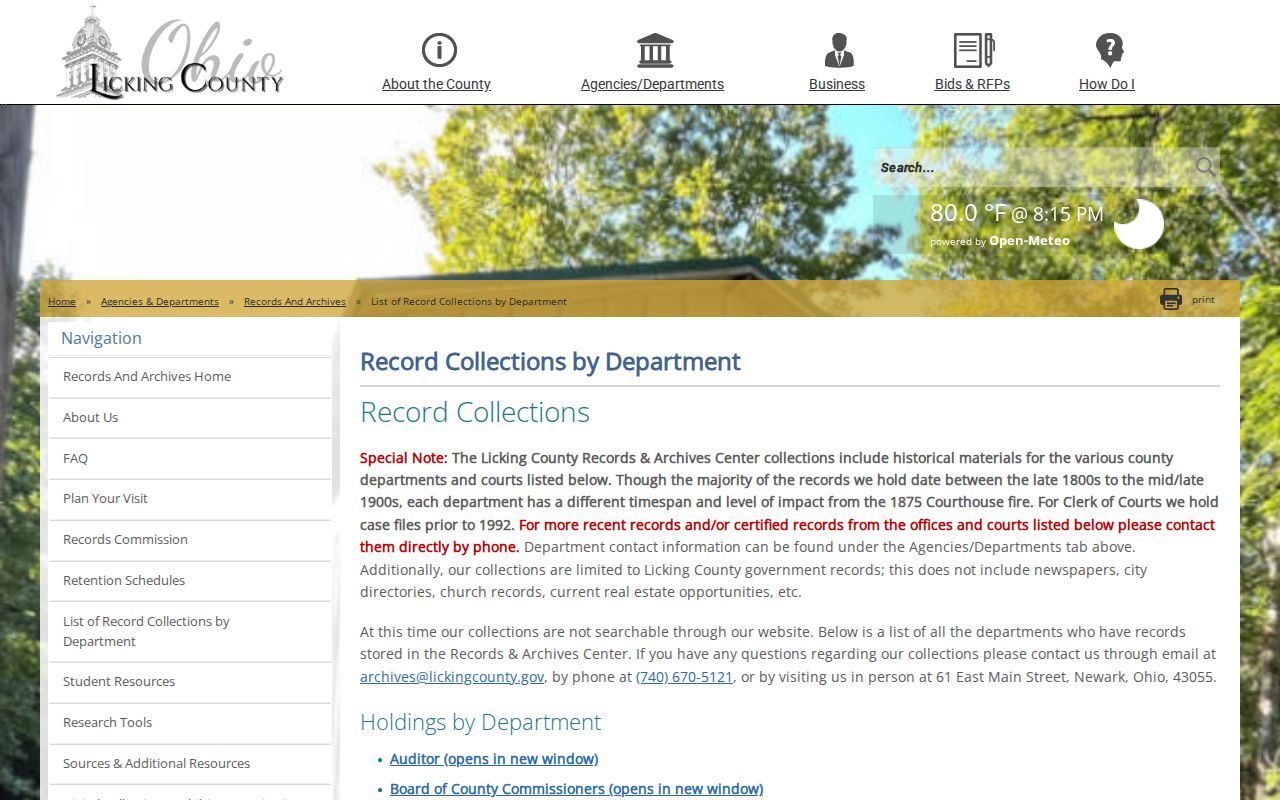
The archive is not a searchable online civil-docket database. So an older-file request should name the court whenever you can. It should also give the approximate period and the record series. Why does this route matter? A modern portal result does not cover Licking County's older series. One firm limit applies. Archives can research holdings but cannot issue a certified copy. Official certification returns to the Common Pleas Clerk. Or it goes to whichever court keeps the original court record.
Civil Docket Access Rules
Ohio Sup.R. 44 through 47 govern public access to modern Ohio court case documents. The Ohio Public Records Act still applies to ordinary government administrative records. For most post-2009 court case documents, though, it is not the main access rule. Sup.R. 45 presumes access. The same rule lets courts control direct, remote, and restricted material as the rules provide. Some Licking Common Pleas documents are closed to remote view. The list includes protection orders. Personal identifiers and sensitive domestic or juvenile material can also be excluded, so a direct clerk request is the right move for a specific lawfully accessible record.
Licking County Civil Clerk Fee Sources
Copy costs are not filing costs. The Common Pleas fees and payments page publishes the filing-fee schedules, waiver links, and payment channels, so check it there for what a filing costs.
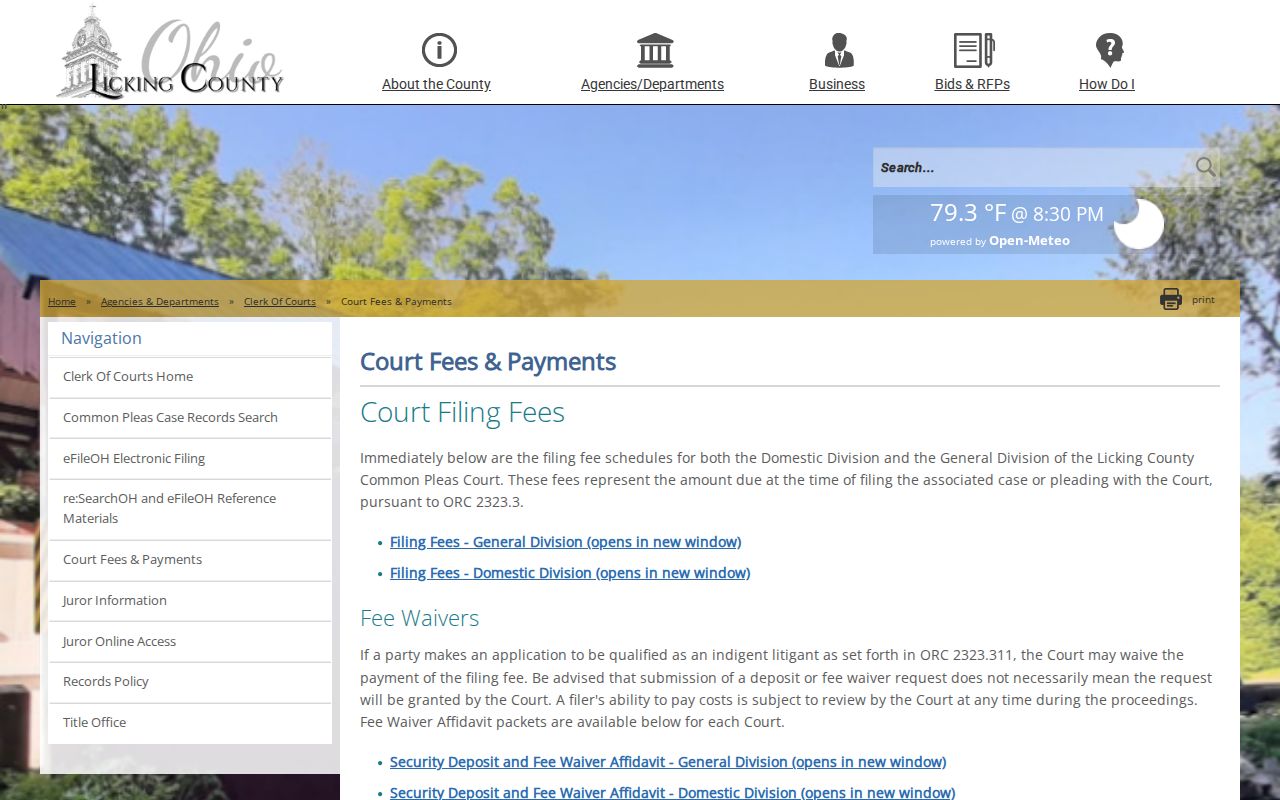
Ask the Civil/Records Clerk for current copy, certification, postage, payment, and turnaround details. Filing fees are one thing; document-copy fees are another. R.C. 2303.901 defines what counts as a Common Pleas case document and lists the protected exclusions.
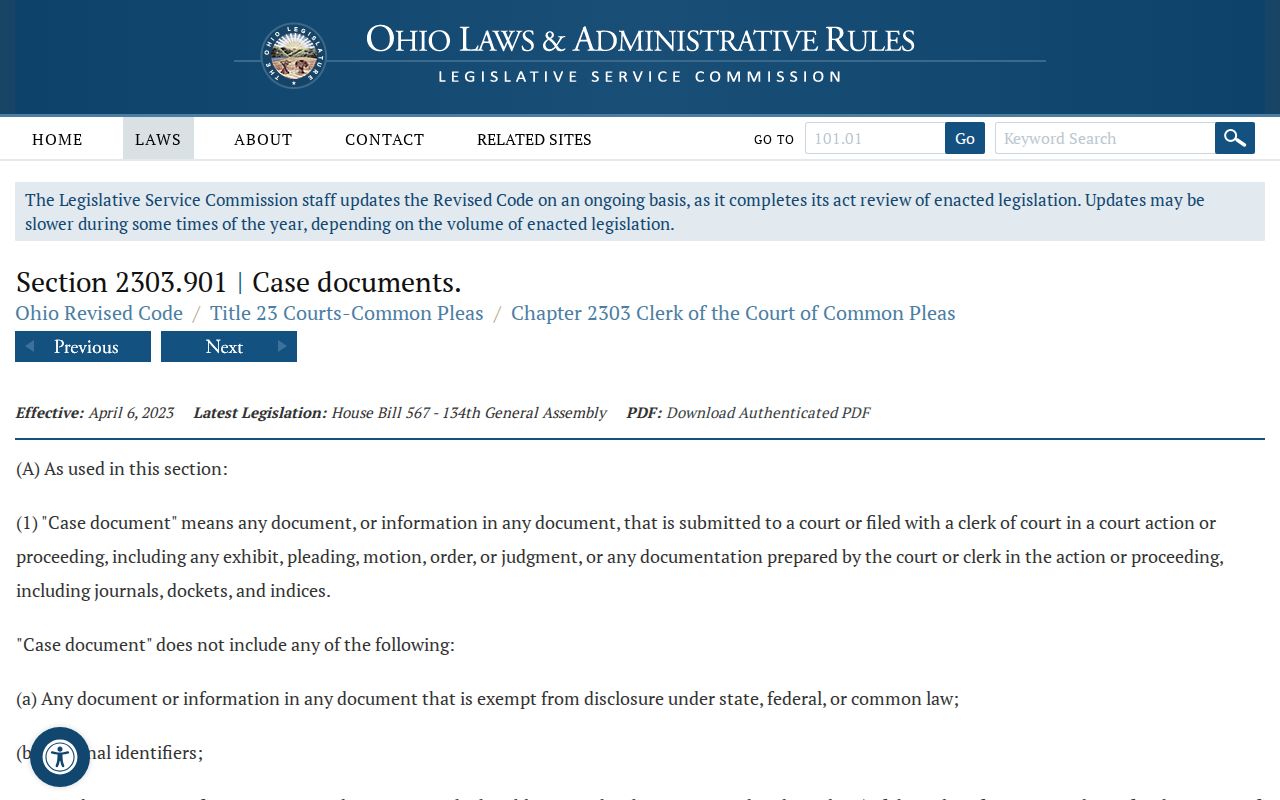
That statute explains the gap in scope. A public civil docket and the underlying case documents do not cover the same ground, and the Public Records Act source marks the boundary for administrative records.
Send a court-file request to the clerk who keeps that Licking case. For General Division civil records, visit the Civil/Records counter at 1 Courthouse Square. Or call 740-670-5791 for a copy quote. Domestic records go to the Domestic Clerk at 75 E. Main, 740-670-5392. Municipal civil and small-claims records sit with the Municipal Clerk, 40 W. Main Street, third floor, 740-670-7800. Each office is its own Licking record channel with its own fees and access rules. Confirm both before you pay. When a file predates the online record system, ask Archives about the historical series first. Then ask the responsible clerk about certification. That two-step keeps research help and the official record separate.